What Month Is Best for Birdwatching in the Ria Formosa?
October to March for waders, flamingos and ospreys; spring and autumn for variety; summer for nesting terns. Then the tide and the hour decide the day.
October to March is the best time for birdwatching in the Ria Formosa if you want the lagoon’s classic birds. The wintering waders are on the mudflats, ospreys and Caspian terns are in for the season, and flamingos are at their most dependable. Spring and autumn bring the most variety, as migrants pass through. Summer belongs to the nesting terns and plovers.
No month is empty, though, only different. And on the day itself, two things matter more than the month: the tide, and the hour you go.
October to March: the classic season
The one-hour catamaran from Faro marina says so in its own listing: “Best season is from October to March.” On the East Atlantic Flyway, the Ria Formosa is a place to spend the winter or to refuel between Africa and northern Europe, and the mudflats fill with waders: dunlin, bar-tailed godwit, grey plover, ringed plover, curlew, whimbrel and oystercatcher.
Ospreys winter on the lagoon, and so do Caspian terns. The São Lourenço lake at Quinta do Lago fills with ducks (shoveler, teal, pochard, wigeon, tufted duck), and the Ludo trail west of Faro adds black-winged kites and bluethroats.
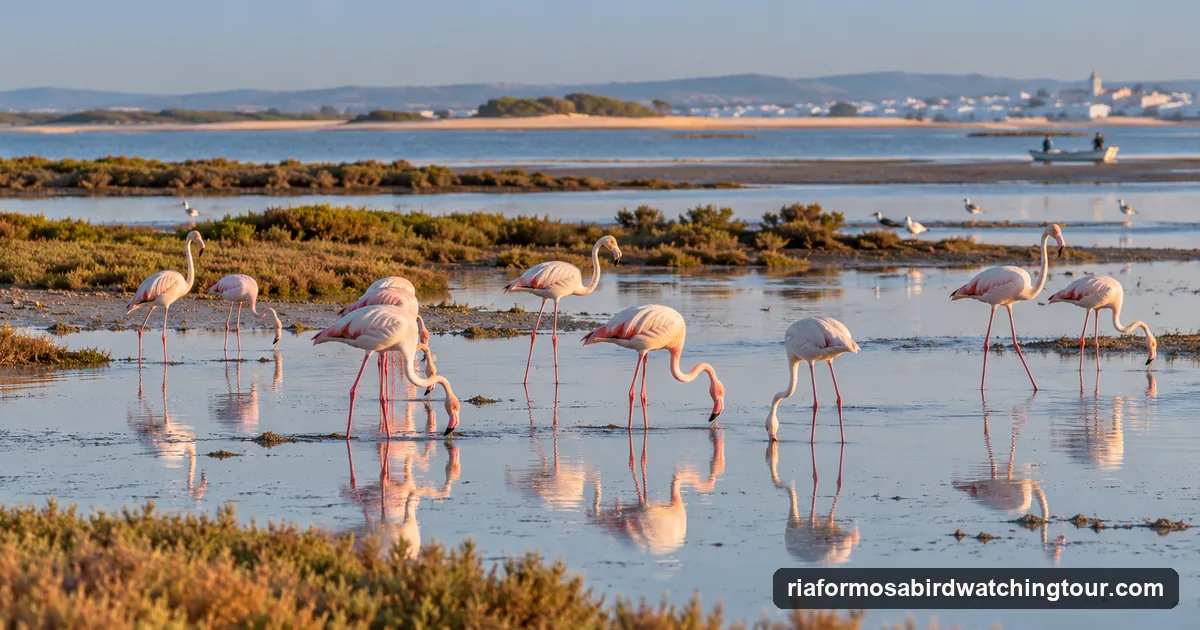
Flamingos feed in the salt pans and shallows for much of the year, and winter is when they are most dependable. Even then they are a bonus, not something a booking can secure. The flamingo guide explains where they feed and why no trip promises them.
Spring and autumn: passage
Twice a year waders pass through in large numbers, using the Algarve’s wetlands to refuel. Autumn brings big flocks of waders and waterfowl, and the flamingos are back in good numbers by then: a September 2026 reviewer of the Faro solar boat counted “around 25-30 flamingos as a bonus”. In spring the breeding birds are busy, and flamingos are fewer, but often still some.
One spring detail matters when you book. Lands’ eco birdwatching boat runs as a two-hour walk in April and May, not as a boat trip. The other solar boat on the same street, pinned on this page, has reviews from late May, so a spring boat is there to book.
June to August: nesting time
Summer is breeding season. Little terns nest in colonies on the island sand, Kentish plovers on the lagoon beaches, and black-winged stilts and avocets around the salt pans. Spoonbills breed here too. Out on Deserta island, Audouin’s gulls nest in the largest colony of the species anywhere in the world, with more than 7,000 nests counted in 2024.
Flamingos are possible in summer but not dependable. The birding still holds up: a July reviewer of the biologist-guided tour at Ludo saw “at least 20/25 species of birds” and pointed out that it wasn’t migration time.
Early, late, and the heat
In summer the heat sets the timetable more than the birds do. One Algarve birding guide advises going early, before boat traffic picks up and the birds move off. A mid-July reviewer of the budget birdwatching hike went early and called it excellent. The sunset walk at Ludo takes the other end of the day: about three hours on mostly dirt paths at golden hour, ending among the salt pans as the temperature drops.
Most listings ask for sun cream, and a June reviewer of the biologist tour was glad of the cloud that made the day “quite bearable”. In winter the catamaran warns of a fresh breeze, Lands lists rain gear, and the Faro solar boat can be cancelled in bad weather, with notice.
The tide decides where the birds are
The lagoon has two high tides and two low tides a day. On an average tide the water rises and falls about 2 metres, and up to about 3.5 metres on big spring tides, so at low water much of the lagoon floor is uncovered.
That moves the birds twice a day. At low tide the waders spread across the mudflats to feed, and that is when the channels are at their best. The catamaran’s listing says “Better to go with low tide”, and a 2025 reviewer agreed. At high tide the flats go under and the birds crowd into the salt pans to wait, so a walk past the pans at Ludo is best around high water. From the Faro shore at low tide, the birds can be a long way out.
Operators plan around the tide, so ask yours what the water will be doing on your date.
If you can pick your dates
Go between October and March, go in the morning, and take a boat into the channels. If your dates are fixed, every season still has its format: boats for the waders in winter, walks at Ludo for the breeding birds and the reed-bed species at any time of year. Boat, walk, Segway or jeep sorts the formats by who they suit.
For the morning boat, the default is the eco-friendly solar boat run by fromherefaro. It leaves from a kiosk on Rua da Porta Nova by Faro’s old-town walls and moves slowly and silently, with a skipper, a local guide, binoculars and printed guides to the lagoon’s fauna and flora. It costs from about $45 on the booking platform and is rated 4.7 over 422 reviews, more than any other trip on this site.
The species, season by season, are in the Ria Formosa birds guide. Every trip, with prices and ratings side by side, is on the homepage.
Seasons and species from the Ramsar listing, SPEA, LIFE Ilhas Barreira and Portuguese birding sources; tides from published studies of the lagoon; tour details from the operators’ listings. Checked October 2026.
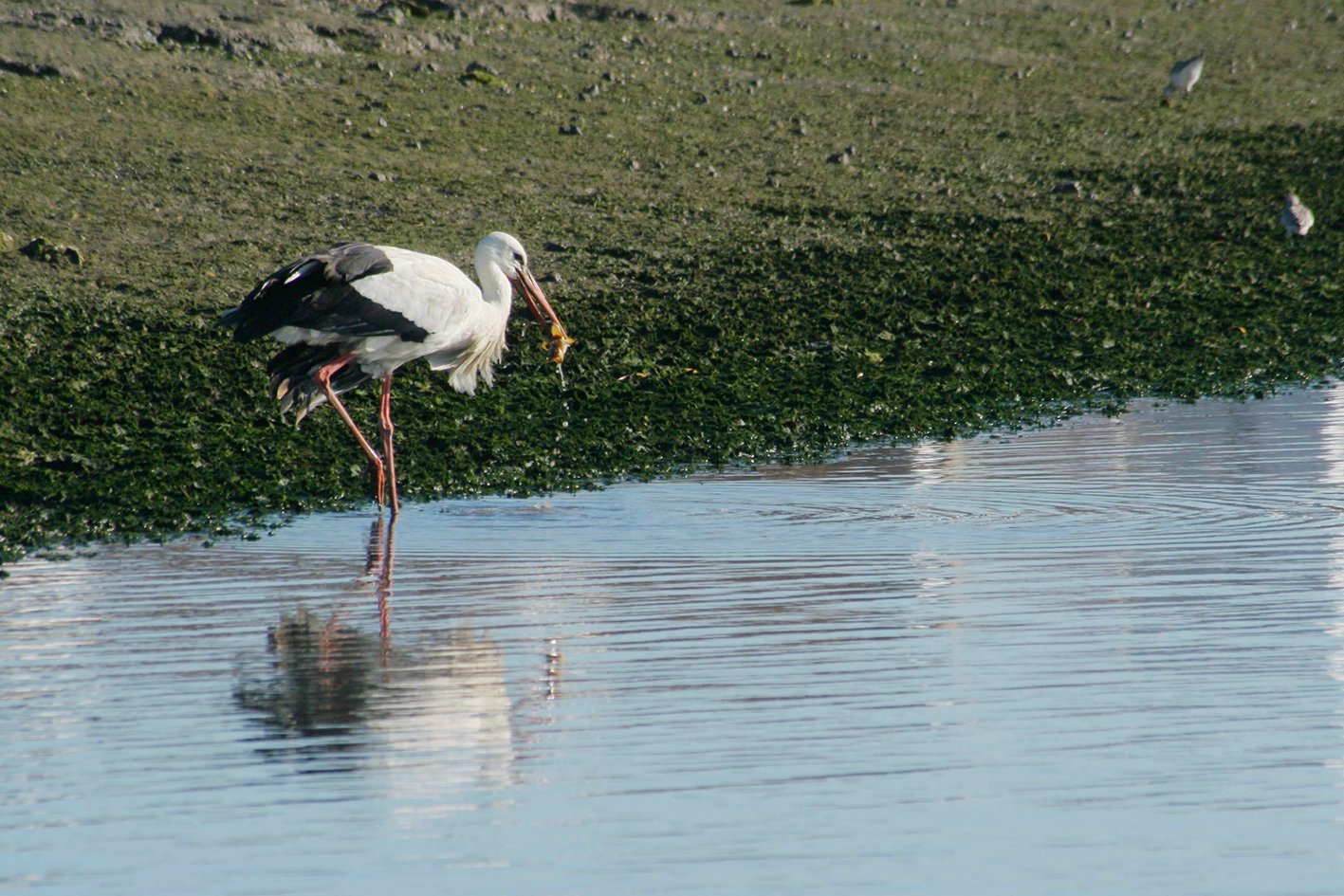
Book the Solar Boat from Faro
A quiet solar-powered boat into the saltwater channels where the birds feed, from a kiosk on Rua da Porta Nova by the old-town walls. Binoculars and printed wildlife guides are on board, 422 guests have rated it 4.7/5, and you can cancel free up to 24 hours before. Flamingos are a bonus on some days, never a promise.
Check Availability & Book