The Birds of the Ria Formosa, by Habitat and Season
Flamingos and spoonbills in the salt pans, the swamphen in the reeds, waders on the mudflats, Audouin's gulls on Deserta: the realistic list, season by season.
Well over 200 bird species have been recorded in the Ria Formosa. A morning out sees a fraction of them, and which fraction depends on the habitat you’re in and the month. The tidal channels and mudflats hold the waders, egrets and cormorants. The salt pans hold flamingos, spoonbills, stilts and avocets. The park’s emblem, the purple swamphen, lives in the freshwater reeds, and the barrier islands hold nesting terns, plovers and a world-record gull colony.
For the channel birds, Lands’ eco birdwatching boat from Faro is a good start, and reviewers say its guides name the birds in several languages. One thing to know before you book: in April and May it runs as a two-hour walk, not a boat trip.
Mudflats and channels
When the tide drops, much of the lagoon floor is uncovered and the waders spread out over the mud to feed. From autumn to spring that means dunlin, bar-tailed godwit, grey plover, ringed plover, curlew, whimbrel and oystercatcher, in their biggest numbers on spring and autumn passage.
Egrets and herons are here all year; the Ramsar listing names egrets among the waterbirds the lagoon is important for. Cormorants fish off Faro in large flocks, and white storks show up on the boat trips too. Ospreys and Caspian terns spend the winter.
The salt pans
Greater flamingos feed in the salt pans and shallows for much of the year. They’re most dependable from autumn into early spring, and no tour can promise them; the flamingo guide has the month-by-month picture.
Eurasian spoonbills breed in the Ria Formosa (a colony here produced GPS-tagged chicks between 2016 and 2021) and are seen outside the breeding season too. Black-winged stilts breed along the pan margins and are abundant at the Tavira pans, and pied avocets breed in the pans. At high tide, when the mudflats are covered, the pans fill with roosting waders and gulls.
The freshwater reeds
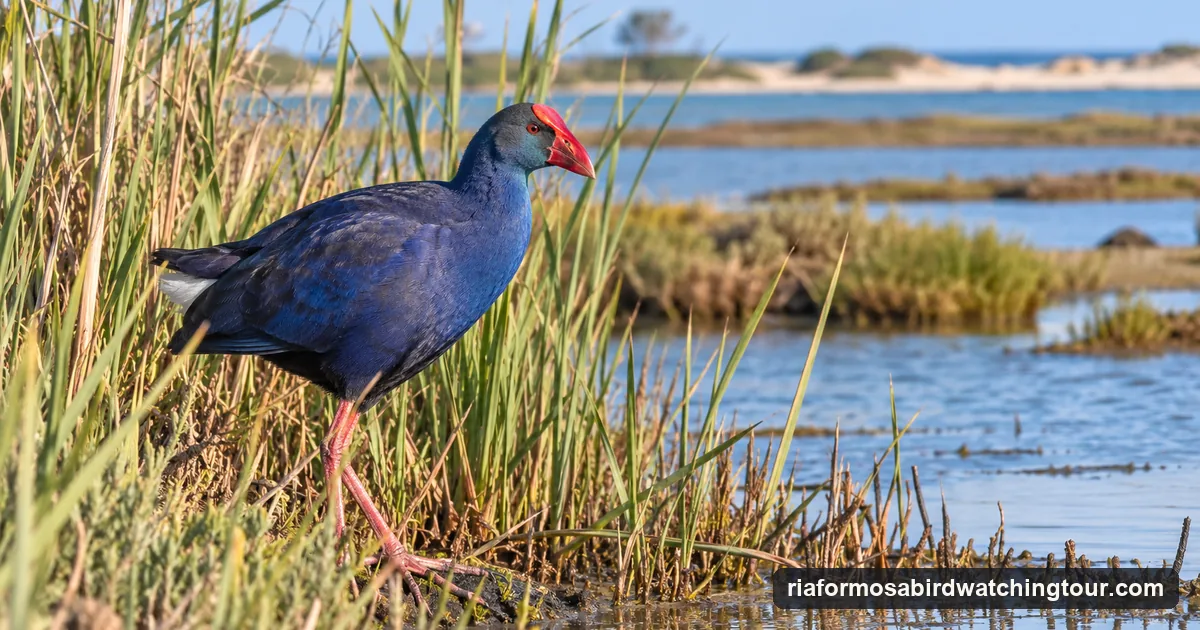
The purple swamphen, caimão in Portuguese, is the park’s emblem and lives here all year. It is a bird of the freshwater reedbeds, not of the tidal channels, so look for it on foot: at the São Lourenço lake hide at Quinta do Lago, around Ludo’s freshwater lagoon, or at Quinta de Marim. Where to watch birds in Faro explains how to reach each one.
The same reeds hold little bitterns and red-crested pochards all year, plus black-headed weavers, an introduced species. In winter the São Lourenço lake fills with ducks, and Ludo adds black-winged kites and bluethroats.
To see this side of the park, walk. The sunset walk stops at the São Lourenço hide, and the biologist-guided tour spends four hours on the Ludo trails.
Beaches and islands
Kentish plovers breed on the lagoon beaches and the edges of the pans, and little terns nest in colonies on the island sand in spring and summer.
Then there’s Audouin’s gull, a rare Mediterranean gull and the lagoon’s standout record. Deserta island, with Culatra, holds the largest breeding colony of the species in the world: 4,300 nests in 2021 and more than 7,000 counted in 2024. Because it breeds here, it isn’t only a winter bird in the Ria Formosa. No tour on this site visits the colony.
The year at a glance
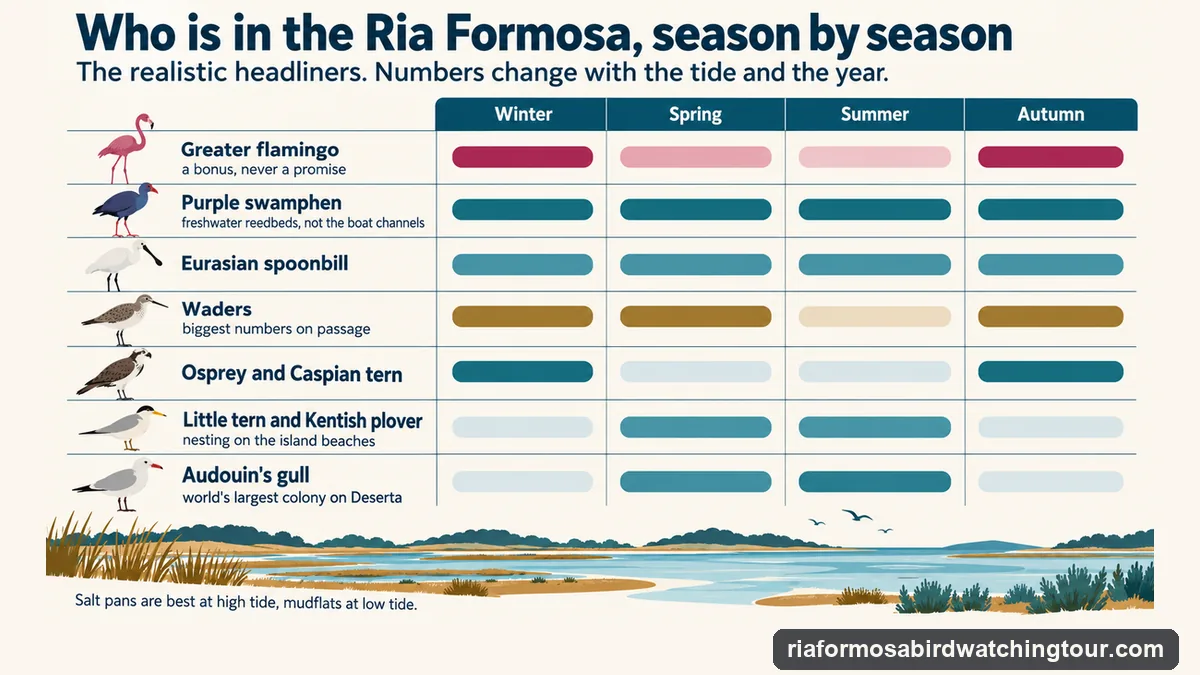
| When | What to look for | Where |
|---|---|---|
| October to March | Wintering waders and ducks, ospreys, Caspian terns; flamingos most dependable | Mudflats at low tide, pans at high tide, São Lourenço lake |
| Spring and autumn passage | Waders in large numbers | Mudflats and pans |
| Spring and summer | Nesting little terns, Kentish plovers, stilts, avocets, Audouin’s gulls | Islands, beaches, pan margins |
| All year | Purple swamphen, spoonbills, egrets and herons | Reeds, pans, channels |
The best time for birdwatching adds the tide and the time of day.
Seeing the channel birds with Lands
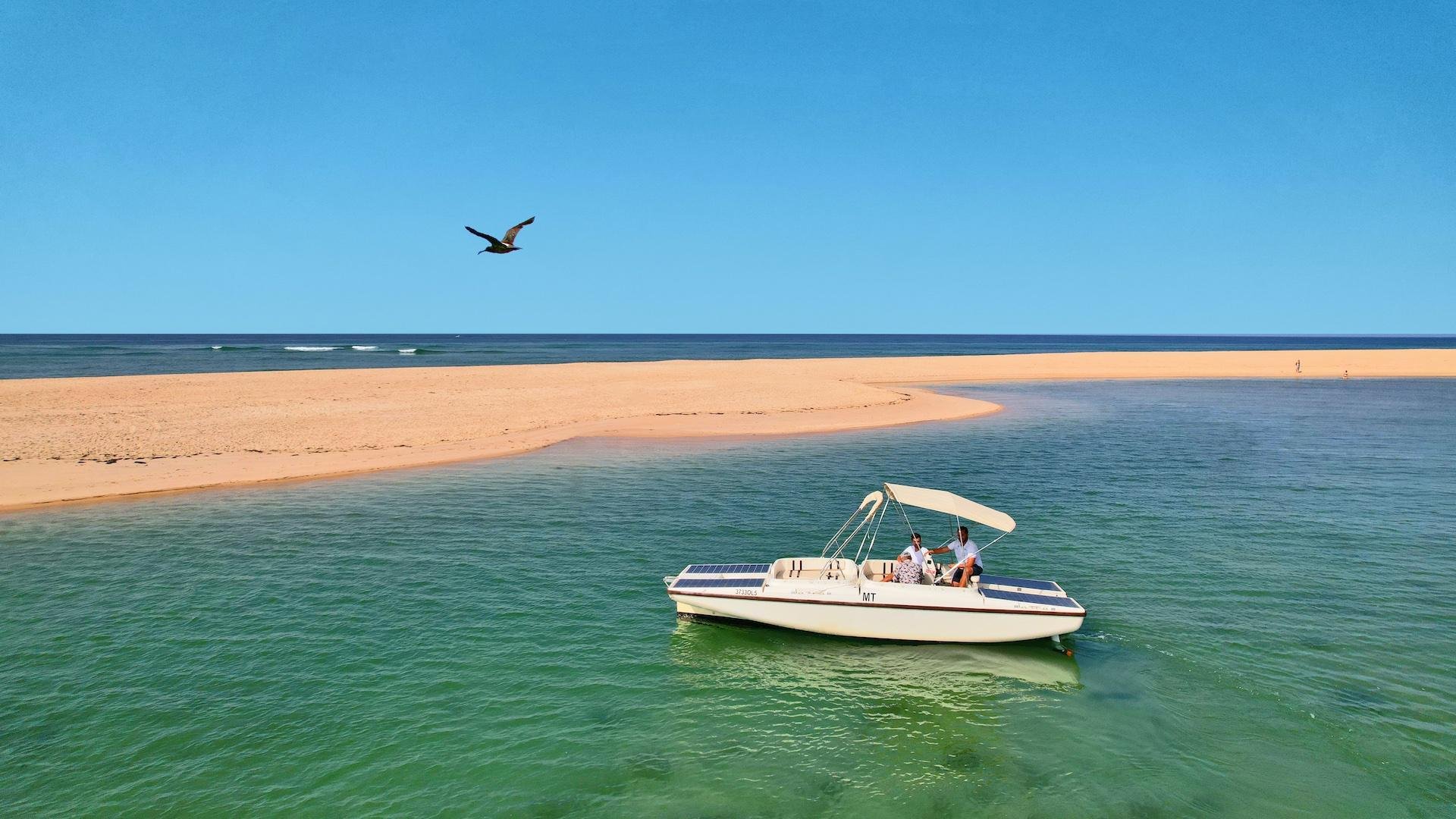
Lands - Turismo na Natureza’s “Faro: Ria Formosa Eco Birdwatching Boat Tour” is two hours on a solar-powered boat that moves quietly through the channels. It leaves from the Lands Shop Kiosk at Cais das Portas do Mar, on Rua da Porta Nova, with binoculars, life vests, a local guide and live commentary. The listing names flamingos, spoonbills and herons among the birds you may see, and guests mention oystercatchers and spoonbills. It costs from about $45 on the booking platform and is rated 4.7 over 96 reviews. Unaccompanied minors aren’t allowed, and it isn’t suitable for wheelchair users.
In April and May, Lands swaps the boat for a two-hour “Spring Tranquillity Walk” that, in its own words, focuses on the atmosphere of the park rather than species spotting, with a stop at Barrinha Beach. If you’re in Faro in those months and want to be on the water, the solar boat run by fromherefaro leaves from the same street and has reviews from late May.
Lands eco birdwatching boat
Waders, herons and spoonbills from a quiet solar boat. A walk in April and May.
Check dates →Sunset birdwatching walk
The Ludo pans and the São Lourenço hide, where the swamphen lives.
See the walk →Prices, ratings and review counts from our October 2026 data check; operators use seasonal pricing, so treat them as the shape of the market, not a quote.
Two non-birds are worth watching for on the walks: Mediterranean chameleons, which one biologist-tour guest found at Ludo, and native terrapins in the São Lourenço lake. Every trip is compared on the homepage.
Species and seasons from the Ramsar listing, SPEA, LIFE Ilhas Barreira, BirdLife and Portuguese birding sources; tour details from the operators’ listings. Checked October 2026.
Book the Lands Eco Birdwatching Boat from Faro
Two hours on a quiet solar-powered boat from Rua da Porta Nova in Faro, with binoculars, life vests and live commentary. From $45, rated 4.7 by 96 guests, free cancellation up to 24 hours before. In April and May it runs as a two-hour walk instead.
Check Availability & Book